
Albumin is a highly important type of protein and the most abundant one found in human blood. Playing a major role in maintaining stable body functions, albumin is often called the guardian of body balance. This substance is naturally produced by the liver, and its presence is crucial in determining how the body regulates fluids, transports nutrients, and protects itself from various health issues. Understanding what albumin is, its functions, and the risks of having low levels is an important first step in maintaining overall health, especially kidney health.
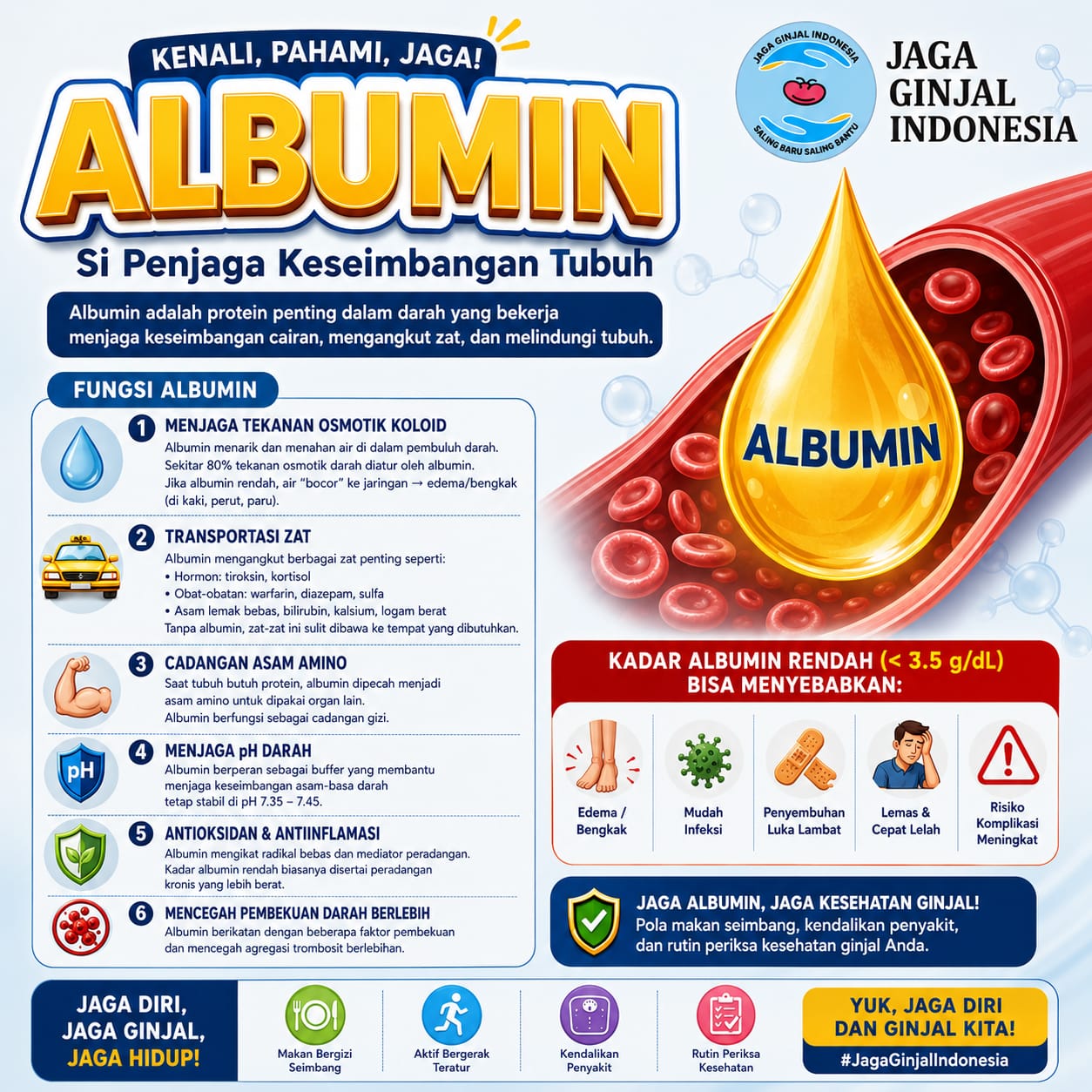
The Vital Roles of Albumin in the Body
Albumin is not just an ordinary protein; it is a substance with various vital functions that support the performance of body organs and systems. Here are its main roles:
-
Maintaining Colloid Osmotic Pressure
This is the primary function of albumin. Albumin works like a magnet that attracts and keeps fluid inside the blood vessels. About 80% of the blood's osmotic pressure is regulated by this substance. If albumin levels drop, fluid will leak out of the blood vessels and accumulate in body tissues, causing swelling or edema, such as in the legs, abdomen, or lungs.
-
Transporting Essential Substances
>Albumin acts as a transport vehicle that carries various substances needed by the body to their destinations. These substances include hormones (such as thyroxine and cortisol), certain medications (like warfarin, diazepam, and sulfas), as well as other components like fatty acids, bilirubin, calcium, and heavy metals. Without albumin, these substances cannot be properly delivered to the organs that need them.
-
Serving as an Amino Acid Reserve
When the body lacks protein intake from food, albumin can be broken down back into amino acids. These are then distributed to vital organs to meet nutritional needs and keep body functions running normally. Albumin acts like a protein "savings account" that can be used whenever the body needs extra energy or cell-building blocks.
-
Maintaining Blood pH Balance
Human blood must maintain a stable level of acidity or alkalinity so that body cells can function properly. Albumin acts as a buffer that helps maintain the acid-base balance of the blood, keeping the pH level stable between 7.35 and 7.45. This role is highly crucial for chemical reactions in the body to run smoothly and safely.
-
Antioxidant and Anti-inflammatory Properties
Albumin has the ability to bind harmful free radicals that can damage body cells, and it also acts as a mediator for inflammation. If albumin levels are low, the body's ability to fight inflammation and cell damage decreases, making it more vulnerable to sickness and slowing down the recovery process.
-
Preventing Excessive Blood Clotting
Albumin works together with various blood clotting factors to maintain balance. It helps prevent abnormal blood clotting or the formation of blood clots inside the vessels, which could otherwise block blood flow to vital organs.
The Dangers of Low Albumin Levels
Normal albumin levels in adults are usually above 3.5 g/dL. If the levels drop below this number, it indicates that there is a problem within the body. Low albumin levels can trigger various health issues, including:
- Edema or Swelling: Fluid builds up in body tissues, visible through swollen legs, a puffy face, or a feeling of fullness in the abdomen.
- Prone to Infections: The body's defense system weakens, making it easier to get sick or contract bacterial and viral infections.
- Slow Wound Healing: Due to the lack of amino acids and nutrient carriers, the process of repairing damaged tissues takes much longer.
- Fatigue and Weakness: The body lacks energy reserves and nutrients, making physical and mental activities feel heavy and exhausting.
- Increased Risk of Complications: For those with kidney problems, low albumin is a serious warning sign. It can worsen kidney function, trigger other diseases, and increase the risk of severe complications.
The Link Between Albumin and Kidney Health
The kidneys play a huge role in keeping albumin levels normal. In a healthy condition, the kidneys filter waste from the blood but retain important substances like albumin so they are not wasted in the urine. If the kidneys are damaged or not functioning well, the kidney filters leak, causing albumin to escape into the urine. The more albumin is lost, the lower its level becomes in the blood, which further strains the declining function of the kidneys.
Therefore, maintaining albumin levels also means protecting kidney health. The two are closely interrelated.
How to Maintain Albumin Levels and Kidney Health
To keep albumin levels balanced and your kidneys healthy, here are simple steps you can apply to your daily life:
- Eat a Balanced Diet: Meet your needs for high-quality protein according to your body's condition, complemented by sufficient intake of fruits, vegetables, and fluids. Avoid food that is too salty, too sweet, or contains excessive saturated fat.
- Stay Active and Exercise: Engage in regular physical activity to keep blood circulation smooth and maintain a good body metabolism.
- Control Underlying Health Conditions: If you have conditions like hypertension (high blood pressure) or diabetes, ensure they are well-managed. These two diseases are the leading causes of kidney damage that leads to albumin loss.
- Get Regular Health Checkups: Do periodic health checkups, including testing your albumin levels and kidney function. Early detection of problems makes treatment easier and prevents the condition from worsening.
Albumin is a simple substance, yet it plays a massive role in keeping our bodies functioning properly. Understanding how it works and keeping its levels normal is the best way to maintain body balance while protecting our kidneys to stay healthy, allowing us to live a better quality of life. Let's start caring for ourselves and protecting our kidney health starting today.